
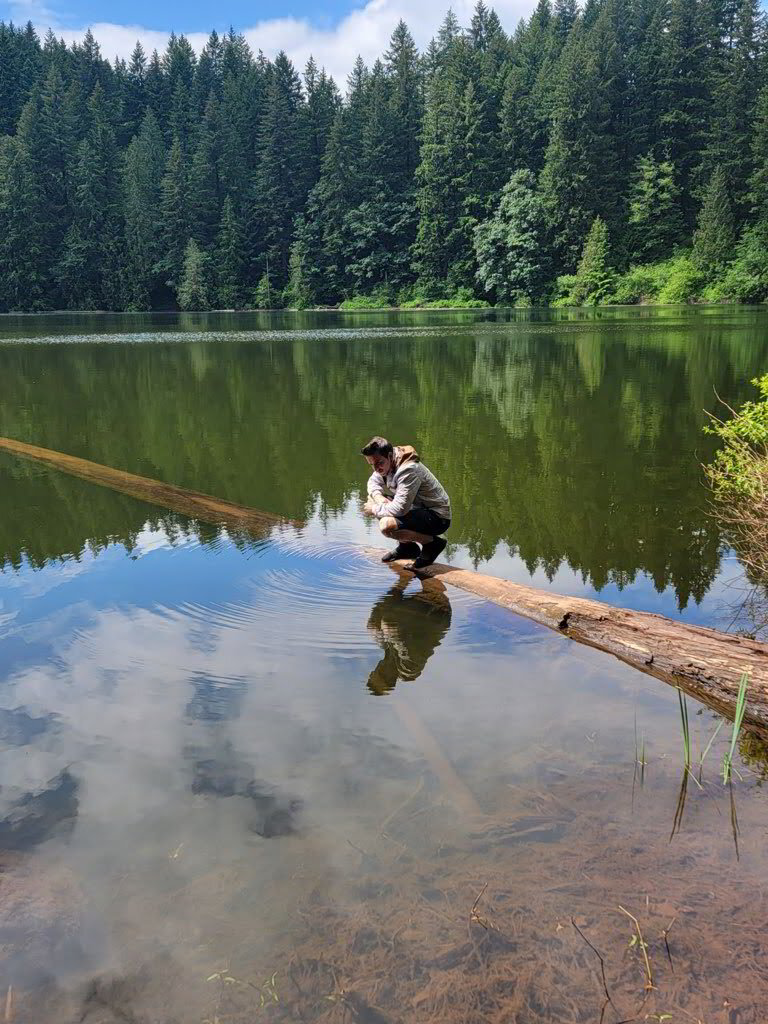
Twenty-two years ago, a little 8-year-old boy walked into our lives and, to our good fortune, became part of our family in the most unexpected way. My sister was married to Tony’s uncle, and one day, Tony’s mom—as the sole living parent—died suddenly. This left Tony in the care of extended family, particularly his grandpa. Even though the marriage between my sister and Tony’s uncle dissolved, Sis remained in contact with his family and began to support Grandpa by taking this little boy on outings two weekends a month. It was a memorable time; laughter filled their lives again.
This cheerful, eager-to-please child moved something in my sister’s heart. Her loving consistency offered an expansive sense of stability as Tony grieved the loss of his mother and adjusted to life without her. As the bond between them grew, Sis considered something radical: What if she adopted Tony, keeping him connected to his family of origin? When she floated the idea, his family members were supportive and grateful. Tony was too! On Adoption Day, our whole family was present to witness and celebrate this young child’s entry into a family that, we discovered, was not whole without him.
What turns a stranger into family? What is needed to change someone from “other” to “familiar”? Sometimes the transition is subtle—almost unnoticeable—how someone slips into a new place in our heart. I believe God is at work here…but why?
Scientists write that part of primal human development was recognizing those who were “other” to us and to our tribe. Our ancestors quickly identified threats to survival in this way. Yet even in our modern world, this perspective of “us and them” remains prevalent.
How do we pay attention to this messaging and our own way of interacting with those we identify as “other”? Why should we bother reflecting on this at all if society still promotes this survival thinking as relevant?
As people of faith, we believe that all human beings are made in the image and likeness of God. Yet, not physically resembling each other, the image and likeness must lie much deeper—like a treasure to be found. God’s kind of wonderful scavenger hunt, with the prize going to the one who perseveres! How many “images and likenesses” of God do we need in our lives? Isn’t the one way I already see God, enough?
Apparently, it isn’t enough for God. So, what role does “the stranger” play? Does “the stranger” exist as a profound invitation to find God in everyone?
I recognize “others” in the hard-working men who stand nervously in the hardware store parking lot, hoping to be hired for a day’s labor. I hear it in the soft lilt of an Asian accent in the woman who scans my groceries at the store, and in the man who sits outside the local coffee shop playing his harmonica, adding sweet, unfamiliar tunes to the air we breathe in common.
How can I recognize God’s image and likeness in these individuals—because that is God’s invitation, right? What is it about these men in the parking lot, or the woman serving at the grocery store, or the playful musician, that pulls back the veil of my understanding of God a little more? Pondering this as I drive around running my errands, my journey becomes a prayer—a time of reflection where I contemplate God in fluid new ways and open my heart to the surprising gift of the stranger.
Hope dwells here for me. These days, I often feel overwhelmed by the rhetoric of seeing every stranger as a threat. Do we pray as though God were galaxies away? What if God is just within my neighborhood? What miraculous things will God reveal to me—that I may only hear in this way—while I learn about, even talk to, the stranger?
My sister’s willingness to leap toward an unknown blessing, and her radical hope expressed in a newly forged connection, has always been a source of wonder and awe for me. Maybe people don’t slip into a special place in our hearts after all; maybe our hearts get bigger. The Heart of Jesus is like that. We’re taught that there is enough room for everyone—those who look, speak, worship, or live as we do, or not—those who are “same” or “other”—in his Sacred Heart. Perhaps our hope in ongoing connections, in small authentic gestures, fosters in us a heart like Jesus.
When hope feels slippery, I’ve decided to reach out so that there are fewer strangers in my life. There is hope that in these encounters, traction is possible. Will you join me in that effort? I can’t wait to meet you—perhaps currently a stranger—and discover what God is saying to me through you!
Going Deeper:
-
How willing are we to make the stranger more familiar? To “put a face” on those who are different?
- Make a list of small actions that are possible—perhaps outside your comfort zone. Start the list with what’s most doable.
- State your purpose so you don’t forget why you find this important enough to do. Make your purpose real and personal.
- Review—pay attention to hope. Is hope growing in your heart? What are you feeling? Perhaps adjust your practices accordingly.
- You aren’t trying to become a saint here—or maybe you are! You are working to expand your understanding of how God uses the stranger to transcend those self-made or societal boundaries when possible.
- How does this practice relieve some of your sense of helplessness in the face of what you experience around you?
- Does Jesus show up in the stranger? If not, ask him for help to see.
-
Is there something scary about the stranger—about people of different cultures—to you?
- Look to the Gospel. What did Jesus do? Study his approach closely: to those he did not know, to those whose culture was unfamiliar to him. Walk next to him. Observe. How does Jesus’ model of behavior help you unwrap your fears?
-
The “Little Way” of St. Thérèse of Lisieux is a path to holiness focused on performing small acts of love and kindness with great devotion and trust in God. It emphasizes finding God in everyday tasks and cultivating a childlike spirit of humility and abandonment to God’s will. There is something very Ignatian in her approach to finding God in all things.
- Spend some time reading up on St. Thérèse and her timeless practice.
Image used with permission from Tony Jacobs.
Thank you!
The “Into the Deep” weekly blog is a free offering to live our mission of accompaniment. If someone forwarded this to you, please be sure to sign up at the bottom of this website page so that you receive an email each week with the new blog.
Comment!
If something our writers shared resonates with you, please feel free to write a positive and uplifting comment by scrolling down to the bottom of the page.
Support Us!
You can help support this free offering with a small monthly donation! Your recurring generosity enables us to continue building our home of accompaniment. If you would like to donate, please do so here.
Monique Jacobs
Monique Jacobs has been engaged in professional active ministry in the church for 40+ years, offering workshops, retreats, and writing. She accompanies people in these roles, and as a Spiritual Director, using Ignatian methods and spirituality. Her joy is to serve as mentor and companion to others, highlighting their gifts and helping to build up the body of Christ. Monique also hosts a YouTube Channel: Finding God in All Things, new videos posted weekly. Monique serves as the Director of Mission and Identity for Catholic Charities of Northern Nevada. Subscribe to Monique’s YouTube Channel, Finding God In All Things.
Comments
Loading comments...
Leave a comment