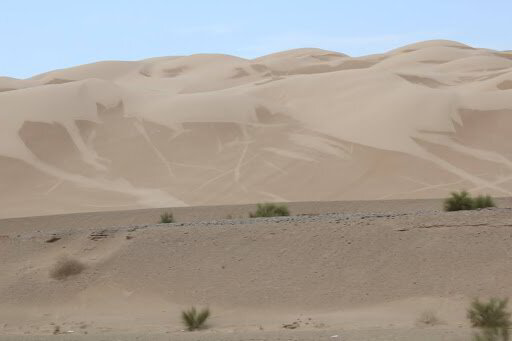
I’ve had migraine headaches my whole adult life. When a headache develops, I go to bed and close the shades. I can’t talk to anyone. If they persist, nausea and vomiting come next. I need darkness and silence. It is in that space, devoid of power, that I am offered the opportunity to encounter the desert.
Still, I don’t give up easily. I don’t accept this cross without a bit of resistance. Standing at the desert’s edge, I try to fight it. Typically starting as a sinus headache, I take antihistamines and decongestants. Sometimes this works. Other times, it does not. If the headache persists, it progresses from just sinus pressure to the generalized throbbing of a migraine. I take acetaminophen or naproxen. If that doesn’t work, then nausea shows up. I take something for the nausea. If I can just sidestep the pain and loss of an entire day, I will.
While I consider these headaches a small cross, there is a lot to be gleaned from having them. You see, each cross teaches me how to encounter the deep structure of my journey along the paschal path. It is a chance to unite with Christ in his passion (suffering), death (acceptance), and resurrection.
I’ve had plenty of large crosses too. I’m old enough that I’ve lost my grandparents and parents. I’ve faced idiopathic epilepsy and a major scoliosis surgery with one child, and mental health issues leading to drug and alcohol addiction with another, which caused the third child to often be overlooked.
I’ve lived through an F-4 tornado, with the roof of my husband’s clinic being peeled off while we huddled in the lab. If you’ve lived, you’ve had a mixture of large and small crosses, too. I’m learning that each of these experiences follows the same route. I will have to suffer. I will have to die (often to my own will) but then, when I allow God to guide me through the pain, there is hope of some kind of resurrection.
No matter the type of cross I carry, the cross offers me a desert experience. In Hebrew, the word for desert is Midbar (MDBR). It means desert or wilderness. Its root, DBR, means ‘to speak’.
Upon entering into this desert of suffering, I try to follow the example of Jesus as I pray, “Lord, if it be your will let this headache pass.” I don’t want to have to face this pain. Sometimes I plead and bargain with God. At some point, though, I realize that I will have to accept the pain and stop fighting the headache.
Now that I’ve stopped fighting, I stop talking and start listening. I start relying on God. I know that Jesus concludes the passage with, “Nevertheless, not my will, but yours be done.” Since I’ve resigned myself to the pain, I lie in silence, a wet cloth pressed against my forehead, alone.
That is when something magical always happens. It’s not a Hallmark-movie kind of magical occurrence. The pain doesn’t instantly go away. Instead, as I lie in the dark facing the pain, I no longer feel alone. The desert is the place where I feel accompanied in the pain. This makes sense to me because I once had a priest tell me that the word ‘alone’ means ‘all-one’.
While I do not believe that God causes our pain, I do believe that he allows the pain. I’ve discovered that there is an anomaly that occurs once you face the inevitable; you always find a little relief. When I refuse to accept my reality, I am alone. Accepting my cross and entering my desert, God is all around me, filling up the room. That is not a figurative statement. In my dark and silent bedroom, there is a presence that I feel. That is when hope arrives. That is when the peace that passes all understanding shows up. The desert is a place where I find God.
Going Deeper
-
In your personal prayer time, immerse yourself in the desert experience. Using Lectio Divina, pray with the following scripture passages:
- Isaiah 43:19 // I will make a way in the desert
- Deuteronomy 8: 15-16 // Testing and presence
- Isaiah 40:3 // Preparing a way for the Lord
- Matthew 4:1 // Jesus tempted by the devil
-
Read about the importance of “Desert Time” in a piece written by Becky Eldredge.
-
Learn more about why we resist the desert with another shared experience of suffering.
Photo by Jean Heaton.
Thank you!
The “Into the Deep” weekly blog is a free offering to live our mission of accompaniment. If someone forwarded this to you, please be sure to sign up at the bottom of this website page so that you receive an email each week with the new blog.
Comment!
If something our writers shared resonates with you, please feel free to write a positive and uplifting comment by scrolling down to the bottom of the page.
Support Us!
You can help support this free offering with a small monthly donation! Your recurring generosity enables us to continue building our home of accompaniment. If you would like to donate, please do so here.
Jean Heaton
Jean Heaton is the author of “Helping Families Recover from Addiction.” She offers her experience, strength and hope to friends and family members affected by the addictions of others using both the 12-steps and Ignatian Spirituality. Recently, she’s been invited to engage a wider audience that includes parishioners, spiritual directors, volunteers, rehab facilities and people who work in pastoral care ministries. She offers resources at www.jeanheaton.com.
Comments
Loading comments...
Leave a comment