
My friends—Mary Anne and Sister Mary Michael, OP—and I have a special relationship with a local drug and alcohol rehab center. We gathered there one night for dinner and a speaker afterwards. The speaker, an alumnus of the program, was Ed, a natural-born storyteller. He began his talk saying, “If I’d had any other option, I never would’ve come here.” Luckily for him, it was the gift of desperation that cracked open a door he hadn’t known existed. It gave him the chance to stop, reassess, and begin again.
This place feels sacred; like the perfect place to heal a weary soul. It is situated on acres of rolling green grass, dotted with trees and overlooking a pond—perfect for fishing or soul-searching. We wandered the grounds before the talk. Many of the residents have known Sister Mary Michael for years. They share a bond that started during the pandemic, when the young men worked on the grounds at the Dominican Retreat House nearby. As she got to know them, she started calling them her St. Joseph fellas. (She’d prayed to St. Joseph to help her find a man to assist with the yardwork.)
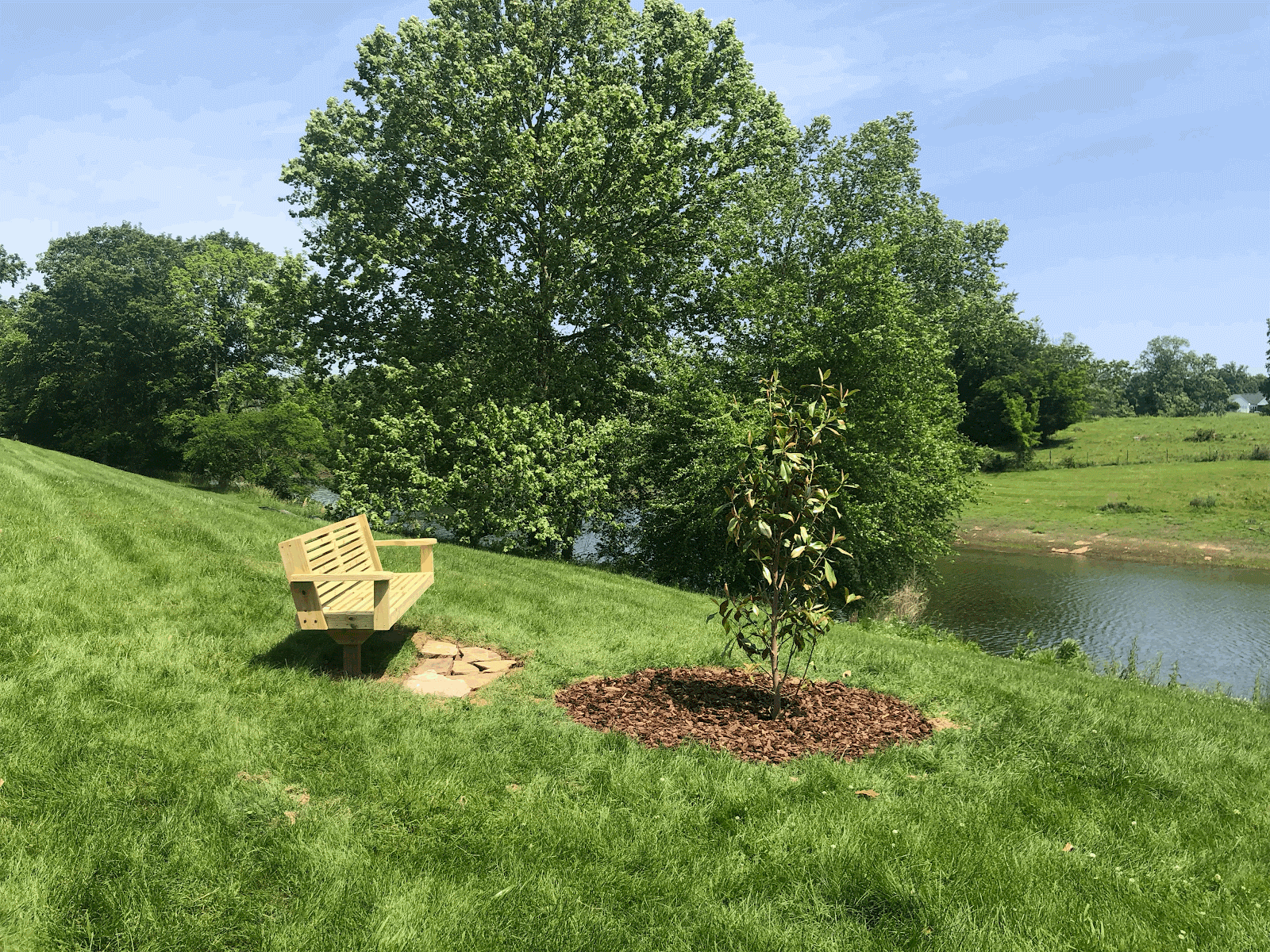
Eventually, we paused at the bench overlooking the pond, situated near a newly planted magnolia tree. The area—lovingly referred to by Sister as the Grotto of Hope—was created at her urging. She secured the funds to build the bench and purchase the tree to create a place where the men would have a quiet space to reflect—a place that served as a visual reminder that there is always hope.
Ed continued recalling those early days in treatment—how angry he felt, how afraid he was, how impossible everything seemed. “I was a mess,” he admitted. “You couldn’t talk to me. My behavior was out of control.” Then he said something that stayed with me long after the evening ended:
“I was making decisions that might affect me for a long time to come, based on feelings that were fleeting.”
The truth of his words hit me like a bolt of lightning. How many times had I done the very same thing myself?
He went on to tell us that during those turbulent early weeks, when he would start getting out of control, someone in the program offered a bit of unexpected wisdom when he was unwilling to hear anything else:
“Hey man, why don’t you go get a cookie and go pet the dogs.”
The room erupted in laughter. That phrase, it turned out, had become a regular refrain during Ed’s early recovery—simple advice that helped him pause, reset, and keep going.
In my own 12-step practice, we often say that God is in the pause. St. Ignatius of Loyola deeply understood the sacredness of the pause—emphasizing the importance of reflection, discernment, and cultivating awareness of God’s presence in all things.
If we were to look at Ed’s situation as if it were a scene from a movie played back in slow motion, we might see the underlying narrative: his fear of facing his feelings, the weight of past failed attempts at recovery, the wreckage his addiction had left behind, and the insidious whisper of the false spirit telling him he was incapable of change. That’s the hamster wheel of rumination.
And then—someone says, “Go get a cookie and pet the dogs.”
That simple suggestion breaks the cycle. It grounds him in the here and now—not in the past, and not in the “what-ifs.” It redirects his attention away from what he can’t do, and creates space—a grotto of hope—where something new can begin.
Psalm 46:11 reminds us: “Be still and know that I am God.”
When we alone try to make changes, we will fail. But if we can just stop for a moment—remaining motionless, calm, and quiet—in that stillness, in that pause, we can hear truth instead of fear. In that stillness, we can see that we are not alone.
It is an opening for hope—a crack for God to enter through.
Just before we left the treatment center for the evening, I wandered over to the goodie buffet and picked up one of their famous, fresh-baked cookies—packed with chocolate chips and M&M’s—and took a bite. I must admit, it tasted like love.
Then we made our way to the car, stopping at each dog (there are five) that we encountered, offering them a belly rub.
On the way home, we discussed the fellas—hoping that the new guys will find an opening for hope, their own personal grotto of hope.
Remembering the evening, it seems that hope must be contagious. Not only was I a witness to hope, I left feeling hopeful myself. Where are the places where you unexpectedly find hope?
Going Deeper:
-
If you need help finding encouragement and guidance when experiencing hopelessness, read Nurturing Hope by Becky Eldredge.
-
Another example of a witness of hope can be found here: One Person Is Enough to Bring Hope by Becky Eldredge.
-
Read more about finding hope with gratitude with Finding Hope When It Is Hard - When I Wasn’t Thankful by Jean Heaton.
-
Pray with Jesus as our witness of hope in Mark 4: 35-41.
Photo by Jean Heaton
Thank you!
The “Into the Deep” weekly blog is a free offering to live our mission of accompaniment. If someone forwarded this to you, please be sure to sign up at the bottom of this website page so that you receive an email each week with the new blog.
Comment!
If something our writers shared resonates with you, please feel free to write a positive and uplifting comment by scrolling down to the bottom of the page.
Support Us!
You can help support this free offering with a small monthly donation! Your recurring generosity enables us to continue building our home of accompaniment. If you would like to donate, please do so here.
Jean Heaton
Jean Heaton is a blogger, writer, speaker, teacher, and a workshop and retreat leader. Both her husband and son are in long-term recovery, and she has worked her own Twelve Step program for those affected by the addictions of others. Jean is the author of “Helping Families Recover from Addiction.” She shares her experience, strength, and hope with others at www.jeanheaton.com.

Comments
Loading comments...
Leave a comment